
 Using a pressure washer on an old home is not as simple as you might think. While it may be a great way to clean dirty siding and prep for new paint, if not done properly, it can cause more harm than good.
You can cause damage to wood or older soft masonry and force water into the structure of your old house. So, to help you prevent this, I put together a quick primer on using a pressure washer properly to protect your biggest investment.
How to Pressure Wash a House
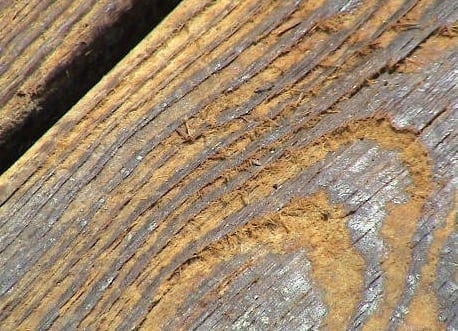
- Don’t Get Too Close – This is the number one problem with pressure washing a house. People put the nozzle right against the surface to get those stubborn stains. Inevitably, this will dig out portions of the wood or mortar and ruin perfectly good siding. Stay at least 1 foot away from the surface at all times.
-

Pressure Washer Damaged Wood
Photo by Jon ChapmanUse a Lower Strength Washer – Some commercial pressure washers are way too powerful to be used on an old wood house. They may be perfect for cleaning driveways, but they will blast right through wood siding especially if there is any wood rot. I prefer a 1500 psi pressure washer. Even if I slip up, I won’t cause nearly as much damage as a powerful commercial washer.
- Keep the Stream Wide – Many pressure washers have an adjustable nozzle that allows you to make the stream of water go from a wide fan all the way down to a single jet stream of water. That jet stream can dig a hole through asphalt! Don’t even think about using it on your house.
- Use Vinegar For Mildew – White vinegar is a great cleaner around the house and it is a natural choice for cleaning mildew off the exterior of your house. Put it in a spray bottle and apply it in small sections. Let it sit about 30 seconds to 1 minute and then use the pressure washer to rinse it away.
- Scrub, Scrub, Scrub – For the really stubborn areas, the best you can do is give up on the pressure washer and use a strong scrub brush with soap and water. Screw one on a extension pole to reach those hard to get areas.
- Keep Good Aim – If you aren’t careful with your aim, you can shoot pressurized water up under the clapboards or shingles and into the walls. And there are plenty of things inside your walls that don’t react well to pressurized water. Try to wash downward along the natural path that water from rainfall would take.
- Let it Dry – Once you’re finished pressure washing, if you plan to paint, make sure you give the house ample time to dry out. Painting wet wood is a great way to waste money on a paint job that won’t last. Depending on your climate 12-24 hrs probably isn’t enough. 48 hrs is a safer bet, but you’ll never have a problem from waiting too long.
Follow these simple rules and you shouldn’t run into any big surprises when you go back to examine your work.


Founder & Editor-in-Chief
I love old houses, working with my hands, and teaching others the excitment of doing it yourself! Everything is teachable if you only give it the chance.
A 137 year old two story historic home was power washed by a professional Now we can see boards popping loose. Is there anything we can do to stop the damage.
Linda Scott Brown
Painter power washed the house and now the wood is fuzzy. I believe he used the wrong tip and ate the wood on my home.
I’d like to thank you for showing what to do and what not to do when pressure washing a house so as not to damage the walls and siding. We’ve been planning to renovate the old resort house that our close friend no longer uses, and cleaning the walls and exteriors is something that is a high priority for us. Since the house itself is made of some expensive wooden material, I’ll make sure to show everyone involved your tips when we get a pressure washing service to help us out.
Our small brick home was built in late 70’s. Need to clean brick but an older and have osteoporosis. Is there a pressure washer you can recommend as this would be the easiest for me. Don’t want to damage brick or get water inside walls. Thnx
Thank you for insightful article. We have a 1900 house. We would like to take off aluminum siding and paint it. The painter wants to pressure wash it with TSP. He uses 3500 psi. When I asked him about damaging an old house, he said it wouldn’t be a problem because he uses a head with a wider spray. Would that be OK?
Hi Elena,
Honestly, in situations like these, our only recommendation we really can confidently stand behind is to use our directory http://www.thecraftsnamblog.com/directory to find a preservationist or preservation certified GC in your area who can hopefully help connect you with people (painters, pressure washers, roofers etc) that have a knowledge, respect, and appreciation for old homes. Good luck!
-Alyssa at The Craftsman Blog
What brand of mild soap would you recommend to wash brick? for concrete (driveway), and for wood (deck)? I have always been one of the few people who believe in scrubbing and no pressure washers (even though my neighbors and relatives laugh and recommend them). Thanks.
Scott- I have a historic home built in 1938 with the original yellow English brick (it is not painted), and in some areas of the house the brick needs to be cleaned. What do you recommend? Thank you.
Basic non-ionic detergents like standard soap or even cleaners like diluted Simple green work great with a nylon scrub brush.
I have a similar question! I have an orange colored reclaimed brick all around my house and it just looks so old and dirty! Can I get it professional power washed without streaks or damage?
Probably, just keep the pressure low to prevent damage.
Thanks what do you consider a safe and low psi
Under 1500 psi.
I have a old house: 1903. Wood siding. A painter power washed it: pushed water inside house and took a layer of wood off the lap siding. How to repair damage, prevent further leaks? Pushed enough water inside and damaged ceiling tile and hard wood floors.
Waiting for the wood to dry out can take a while, then sand it smooth again before painting to hide the damage. The water in the walls will eventually dry out. If you need to help it along use fans directed at the walls along with dehumidifiers.